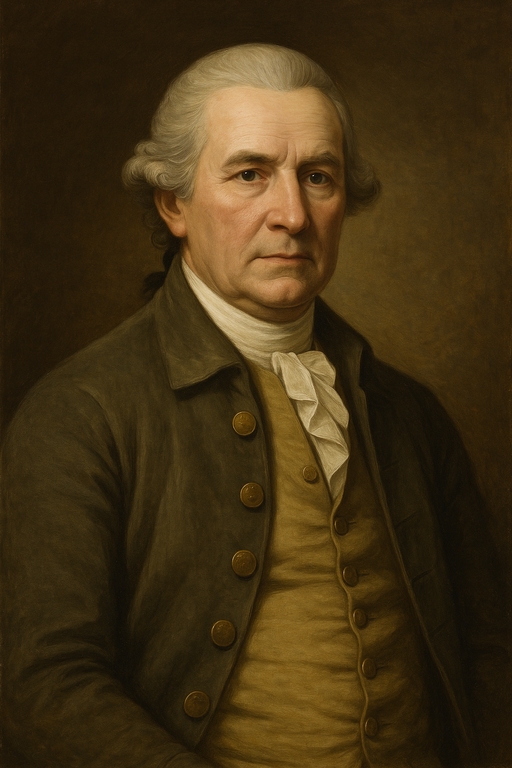
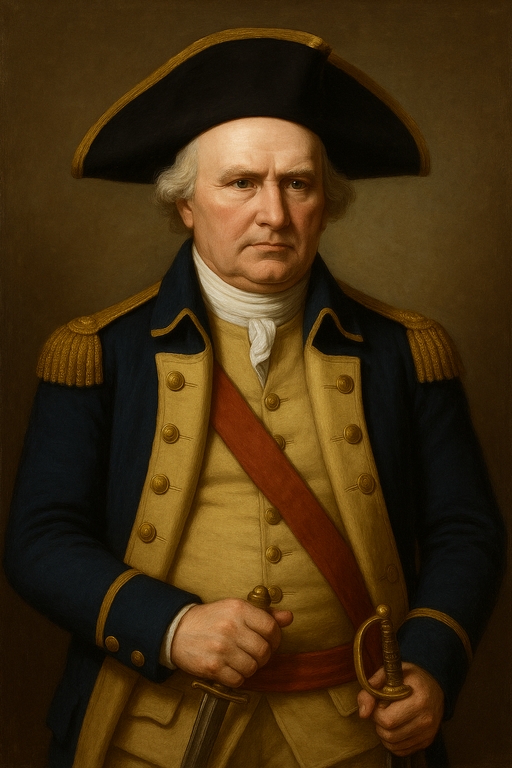
Waightstill Avery (May 10, 1741–March 15, 1821) was a Revolutionary-era lawyer, legislator, and soldier whose public service helped shape the young State of North Carolina. Born in Groton, Connecticut, he studied at the College of New Jersey (now Princeton University), graduating in 1766 with high honors before reading law and moving south to establish his practice. By the 1770s he had become a prominent attorney in the Piedmont and foothills, participating in the colony’s turbulent politics on the eve of independence.
In 1775–1776, Avery sat in North Carolina’s Provincial Congresses, the revolutionary assemblies that assumed power from the royal government. He served on the body that drafted the state’s first constitution in 1776, an organizing document that created the legal framework for North Carolina’s government after independence. The following year he was appointed the first Attorney General of North Carolina (1777–1779), a role in which he prosecuted cases for the new state and helped stand up its judicial institutions amid the pressures of war. He also served repeatedly in the General Assembly—five terms in the House of Commons (1782–1785, 1793) and one in the Senate (1796)—and held militia rank as a colonel during the Revolution.
One of the most colorful anecdotes from Avery’s long career occurred on the western frontier in 1788, when he traded shots in a formal duel with a young lawyer named Andrew Jackson, the future U.S. president. Accounts agree the meeting took place near Jonesborough (then western North Carolina, later Tennessee) after a courtroom dispute; both men deliberately fired wide and left the field unhurt—a telling glimpse of legal culture and honor codes on the early American frontier.
After the Revolution, Avery settled near Morganton on a plantation known as Swan Ponds. From this base he handled a wide-ranging practice across the state’s western courts and invested in land as the mountains opened to Euro-American settlement. He never lived in the area that would become Avery County, but his legal work, public service, and leadership during the founding generation made him an enduring symbol of civic establishment in western North Carolina.
Avery County and Waightstill Avery’s Legacy.
Created on February 23, 1911, Avery County is North Carolina’s newest—and 100th—county, formed from parts of Mitchell, Caldwell, and Watauga. The General Assembly named it explicitly for Colonel Waightstill Avery, honoring his stature as the state’s first attorney general and as a Revolutionary War officer. The county seat, Newland, sits at 3,589 feet, often cited as the highest county seat in the eastern United States. Today the county encompasses communities like Banner Elk, Sugar Mountain, and Elk Park, anchoring the “High Country” along the Tennessee line.
So, what did Waightstill Avery “do” for Avery County? While the county itself was organized nearly a century after his birth, the choice to name it for Avery reflects how people in the mountains saw his contributions: he embodied the founding generation’s push to build functioning courts, a state constitution, and a rule of law that would extend into the west. As attorney general and legislator, Avery helped erect the legal scaffolding on which later counties—like Avery—would stand. His presence in the western court circuits and his reputation as a capable, principled lawyer made him a natural namesake when lawmakers in Raleigh carved a new county from the rugged highlands in 1911. In short, his legacy to Avery County is institutional rather than geographic: the stable legal and political order that enabled settlement, governance, and community-building in the High Country.
Selected milestones & achievements tied to Avery and the county that bears his name:
- Princeton-trained attorney; prominent bar leader in the Carolina backcountry.
- Delegate to the revolutionary Provincial Congresses; member of the committee drafting North Carolina’s 1776 constitution.)
- First Attorney General of North Carolina (1777–1779).
- Militia officer during the American Revolution; later multiple terms in the General Assembly.
- Namesake of Avery County (est. 1911), North Carolina’s 100th and last-created county.
- The famous 1788 duel with Andrew Jackson, illustrating his stature on the frontier legal circuit.
Taken together, Waightstill Avery’s biography reads like a blueprint for state-building in the Southern backcountry: education, law, militia service, constitution-making, and decades of public office. Avery County’s name keeps that blueprint in view—a reminder that the county’s modern communities grew within institutions forged, in part, by the man whose uncommon first name it honors.

Hours of Operation
Breakfast Hours
7am – 11am
Lunch Hours
11am-4pm
Dinner Hours
4pm-9pm
Tavern Hours
4pm-9pm
Location & Directions
Stay at The Inn Next Door